Stop Overusing “Excessive”! Try These 30 Smarter Synonyms
Another word for excessive is too much, but the closest single-word alternatives are extreme, undue, immoderate, inordinate, and exorbitant. Each one changes the meaning slightly. Some are best for amounts, some for prices, and some for behavior or force.
change it into eassy word
The right word depends on what you mean by “too much.” A price that is too high can be called exorbitant. A person who cannot control their behavior may be intemperate or unrestrained. Something that is not needed can be called needless or superfluous.
Quick list: extreme, undue, immoderate, inordinate, unreasonable, exorbitant, extravagant, steep, over-the-top, needless
This article looks at 30 alternatives. For each one you will find a meaning, IPA, usage note, and example sentence, grouped by context.
At a Glance: Excessive Synonyms and Related Alternatives
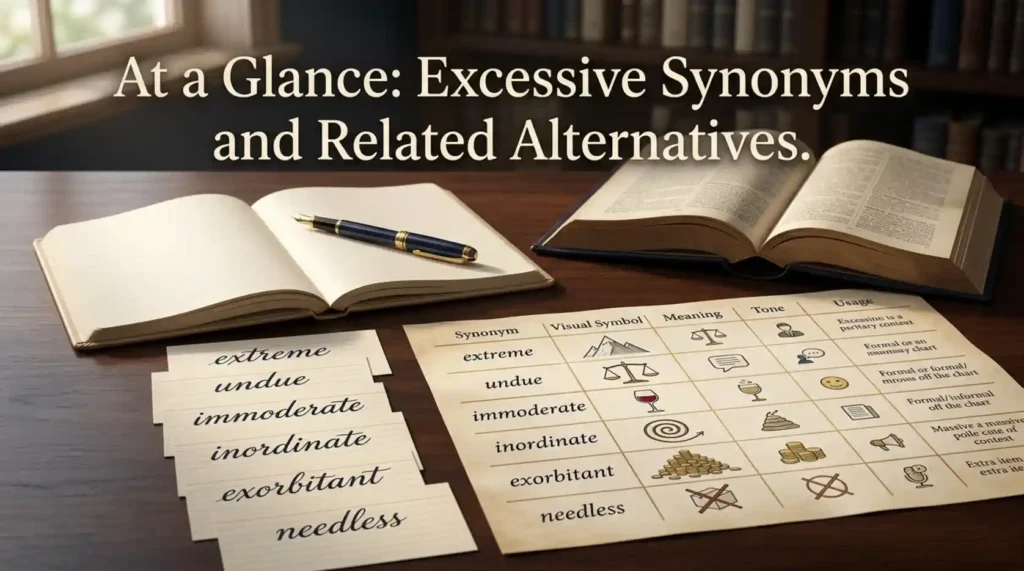
| Alternative | Part of Speech | Meaning | Register / Tone | Ideal Context |
| Extreme | Adjective | Very great in degree | Neutral | Heat, force, measures |
| Undue | Adjective | More than is right or needed | Formal | Pressure, delay, risk |
| Immoderate | Adjective | Not kept within reasonable limits | Formal | Habits, appetite, claims |
| Inordinate | Adjective | Far beyond what is normal | Formal | Time, amounts, attention |
| Unreasonable | Adjective | Not fair or sensible | Neutral | Demands, prices, rules |
| Exorbitant | Adjective | Much too high, especially in price | Formal to neutral | Costs, fees, rent |
| Extravagant | Adjective | Spending or doing more than is wise | Neutral | Spending, gifts, lifestyle |
| Steep | Adjective | Unfairly high (of a price) | Informal | Prices, charges |
| Over-the-top | Adjective | Beyond what is suitable or tasteful | Informal | Reactions, styles, praise |
| Needless | Adjective | Not necessary | Neutral | Waste, risk, worry |
Which Word Should You Use?
| If you want to… | Use | Why |
| Describe a price that is far too high | Exorbitant | It is the standard word for unfair costs. |
| Describe a formal complaint about too much pressure or delay | Undue | It sounds measured and professional. |
| Describe behavior with no self-control | Intemperate | It points to a lack of restraint. |
| Say something is not needed at all | Needless | It focuses on lack of purpose, not amount. |
| Describe a very large amount of time or effort | Inordinate | It suggests the amount is well beyond normal. |
| Describe spending that is wasteful | Extravagant | It links the excess to money and luxury. |
| Describe a reaction that is too dramatic | Over-the-top | It is casual and clear. |
| Describe something that is more than the situation needs | Disproportionate | It compares the response with the cause. |
Exploring the Multiple Meanings of “Excessive”
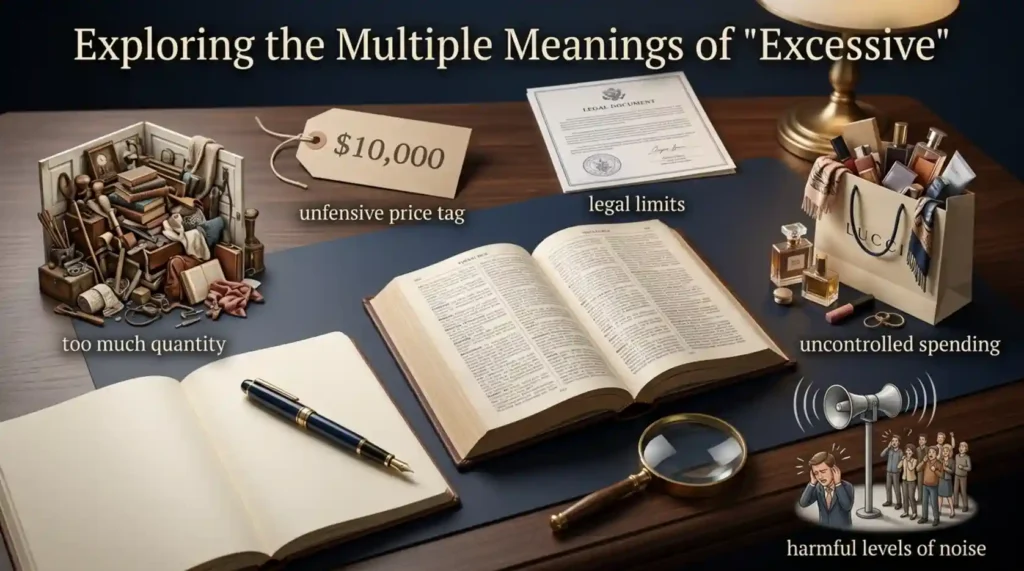
1. More Than Is Needed
- Meaning: Going beyond what is necessary or useful.
- Explanation: This is the plainest sense. It is about amount, with no strong judgment attached.
- Example: The report includes excessive detail about minor points.
2. More Than Is Reasonable or Fair
- Meaning: Too high or too great to be sensible.
- Explanation: This sense is common with prices, fees, demands, and expectations. It suggests the level is unfair, not just large.
- Example: The hotel charged an excessive fee for a short stay.
3. Beyond a Legal or Accepted Limit
- Meaning: Going past what rules, laws, or standards allow.
- Explanation: In law and official writing, the word often describes force, speed, or penalties that cross a limit.
- Example: The court ruled that the officer had used excessive force.
4. Lacking Self-Control
- Meaning: Showing too little restraint in behavior or habits.
- Explanation: Here the word describes how a person acts, such as spending, eating, or drinking.
- Example: His excessive spending left him with large debts.
5. Harmful or Unhealthy Level
- Meaning: At a level that can cause damage or trouble.
- Explanation: This sense is common in health and safety writing. It means the amount has gone past what is safe.
- Example: Excessive noise at work can damage hearing over time.
Sources: Merriam-Webster; Collins Dictionary; Dictionary.com
Analyzing 30 Excessive Alternatives in Detail
Some alternatives below are close synonyms of “excessive,” while others are related words that fit only certain contexts. The Usage notes say which is which.
Core Synonyms
1. Extreme
IPA: /ɪkˈstriːm/ (US and UK)
Definition: Very great in degree or intensity.
- Usage: A close everyday alternative. It stresses intensity more than “more than needed,” so it fits heat, force, or measures better than amounts.
- Example: The extreme heat forced the team to stop work.
2. Undue
IPA: US /ʌnˈduː/ · UK /ʌnˈdjuː/
Definition: More than is right, proper, or necessary.
- Usage: A direct and formal synonym. It is common in set phrases such as “undue stress” or “undue delay.”
- Example: The staff said the schedule put undue pressure on them.
3. Immoderate
IPA: US /ɪˈmɑːdərət/ · UK /ɪˈmɒdərət/
Definition: Not kept within reasonable limits.
- Usage: A formal, direct synonym. It often describes habits, appetites, or strong claims.
- Example: The doctor warned him against immoderate drinking.
4. Inordinate
IPA: US /ɪnˈɔːrdənət/ · UK /ɪnˈɔːdɪnət/
Definition: Much greater than is usual or expected.
- Usage: A direct, formal synonym. It suggests the amount is far beyond normal and is often used with time, attention, or amounts.
- Example: The project took an inordinate amount of time.
5. Unreasonable
IPA: /ʌnˈriːzənəbəl/ (US and UK)
Definition: Not fair, sensible, or acceptable.
- Usage: A close synonym in the “more than is fair” sense. It does not fit the plain “more than needed” sense as well.
- Example: The landlord asked for an unreasonable deposit.
Too Much in Amount
6. Surplus
IPA: US /ˈsɝːpləs/ · UK /ˈsɜːpləs/
Definition: More than is needed or used.
- Usage: A related alternative, not an exact synonym. It describes a leftover amount and carries no judgment about fairness.
- Example: The store sold its surplus stock at half price.
7. Superfluous
IPA: US /suːˈpɝːfluəs/ · UK /suːˈpɜːfluəs/
Definition: More than is needed; unnecessary.
- Usage: A close synonym in the “not needed” sense. It is formal and often describes words, details, or steps.
- Example: Remove any superfluous words from your essay.
8. Redundant
IPA: /rɪˈdʌndənt/ (US and UK)
Definition: Not needed because something else already does the same job.
- Usage: A related alternative. It means “repeated or unneeded,” not “too great.” In British English it can also mean having lost a job.
- Example: The last paragraph is redundant because it repeats the introduction.
9. Extra
IPA: /ˈekstrə/ (US and UK)
Definition: More than the usual or required amount.
- Usage: A related alternative, and a simple one. It means “added” and does not suggest the amount is a problem.
- Example: We brought extra water in case the trip ran long.
10. Overabundant
IPA: US /ˌoʊvərəˈbʌndənt/ · UK /ˌəʊvərəˈbʌndənt/
Definition: Present in too great a supply.
- Usage: A direct synonym for amount. It is fairly formal and works best for supplies or resources.
- Example: An overabundant harvest pushed crop prices down.
Too High in Price or Degree
11. Exorbitant
IPA: US /ɪɡˈzɔːrbɪtənt/ · UK /ɪɡˈzɔːbɪtənt/
Definition: Much too high, especially of a price or demand.
- Usage: A strong, direct synonym for costs. It is almost always about money.
- Example: Many students find rent in the city exorbitant.
12. Extortionate
IPA: US /ɪkˈstɔːrʃənət/ · UK /ɪkˈstɔːʃənət/
Definition: Far too high; unfairly demanding.
- Usage: A stronger, mostly British word for prices. It suggests the seller is taking unfair advantage.
- Example: The airport café charged extortionate prices for a sandwich.
13. Steep
IPA: /stiːp/ (US and UK)
Definition: Unreasonably high (of a price).
- Usage: An informal, figurative alternative. It works only for prices, fees, and similar amounts.
- Example: Twenty dollars for parking seems a bit steep.
14. Sky-high
IPA: /ˌskaɪ ˈhaɪ/ (US and UK)
Definition: Extremely high.
- Usage: An informal, vivid alternative for prices, hopes, and rates. It is a related word, since it describes height more than fairness.
- Example: Sky-high rents are pushing families out of the area.
15. Disproportionate
IPA: US /ˌdɪsprəˈpɔːrʃənət/ · UK /ˌdɪsprəˈpɔːʃənət/
Definition: Too large or too small when compared with something else.
- Usage: A close alternative when the amount is out of balance with its cause. It always compares two things.
- Example: The punishment was disproportionate to the mistake.
Lack of Restraint
16. Intemperate
IPA: /ɪnˈtempərət/ (US and UK)
Definition: Lacking self-control, especially in speech or habits.
- Usage: A formal word for people and behavior. It is not used for prices or objects.
- Example: His intemperate remarks upset the whole committee.
17. Unrestrained
IPA: /ˌʌnrɪˈstreɪnd/ (US and UK)
Definition: Not held back or controlled.
- Usage: A related alternative. It stresses freedom from control, which is not always negative.
- Example: The crowd gave the band unrestrained applause.
18. Extravagant
IPA: /ɪkˈstrævəɡənt/ (US and UK)
Definition: Spending or using more than is sensible.
- Usage: A close synonym when money or lifestyle is involved. It can also mean “very showy,” as in an extravagant party.
- Example: An extravagant wedding left the couple short of money.
19. Lavish
IPA: /ˈlævɪʃ/ (US and UK)
Definition: Very generous, rich, or grand.
- Usage: A related alternative. It often sounds positive, so it is not always a good swap for “excessive.”
- Example: The hotel served a lavish breakfast every morning.
20. Profligate
IPA: US /ˈprɑːflɪɡət/ · UK /ˈprɒflɪɡət/
Definition: Wastefully extravagant.
- Usage: A formal, rarer word. It suits wasteful spending by people or governments.
- Example: Critics called the plan a profligate use of public money.
Overdone or Exaggerated
21. Overdone
IPA: US /ˌoʊvərˈdʌn/ · UK /ˌəʊvəˈdʌn/
Definition: Done or used too much.
- Usage: A simple, related alternative. It works for effort, style, and cooking, where it also means cooked too long.
- Example: The dramatic music felt overdone in a quiet scene.
22. Over-the-top
IPA: US /ˌoʊvər ðə ˈtɑːp/ · UK /ˌəʊvə ðə ˈtɒp/
Definition: Going beyond what is suitable or tasteful.
- Usage: An informal alternative for reactions, styles, and praise. It does not fit prices.
- Example: Her over-the-top reaction surprised everyone.
23. Exaggerated
IPA: US /ɪɡˈzædʒəˌreɪtɪd/ · UK /ɪɡˈzædʒəreɪtɪd/
Definition: Made to seem larger or more important than it is.
- Usage: A related alternative. It describes claims or feelings that are overstated, not amounts that are too great.
- Example: The ad made exaggerated claims about the product.
24. Overblown
IPA: US /ˌoʊvərˈbloʊn/ · UK /ˌəʊvəˈbləʊn/
Definition: Made bigger or more important than it deserves.
- Usage: A figurative, related alternative. It is common for news stories, fears, and praise.
- Example: The reports about the delay were overblown.
25. Overkill
IPA: US /ˈoʊvərkɪl/ · UK /ˈəʊvəkɪl/
Definition: More force or effort than is needed.
- Usage: A noun, so it works differently from “excessive.” It is a related alternative and often follows “is” or “would be.”
- Example: Using three alarms on one door is overkill.
Unjustified or Unnecessary
26. Unwarranted
IPA: US /ʌnˈwɔːrəntɪd/ · UK /ʌnˈwɒrəntɪd/
Definition: Not justified by the facts.
- Usage: A formal, related alternative. It means “without good reason,” so it fits criticism, fear, or action more than amounts.
- Example: The company faced unwarranted criticism online.
27. Gratuitous
IPA: US /ɡrəˈtuːɪtəs/ · UK /ɡrəˈtjuːɪtəs/
Definition: Done without good reason; not needed.
- Usage: A related alternative. It often describes violence, rudeness, or details that add nothing.
- Example: The film was criticized for its gratuitous violence.
28. Needless
IPA: /ˈniːdləs/ (US and UK)
Definition: Not needed; avoidable.
- Usage: A simple, related alternative. It points to lack of need, not size.
- Example: The long delay caused needless stress.
29. Uncalled-for
IPA: US /ʌnˈkɔːld fɔːr/ · UK /ʌnˈkɔːld fɔː/
Definition: Not deserved or not appropriate.
- Usage: An informal, related alternative. It is common for remarks and behavior.
- Example: That comment was rude and uncalled-for.
30. Outrageous
IPA: /aʊtˈreɪdʒəs/ (US and UK)
Definition: Shockingly bad, unfair, or extreme.
- Usage: A strong alternative with an emotional tone. It fits prices, demands, and behavior, though it says more about shock than about amount.
- Example: The shop’s prices were outrageous.
Sources: Merriam-Webster; Collins Dictionary and Thesaurus; Dictionary.com
Excessive vs. Extreme vs. Exorbitant vs. Extravagant
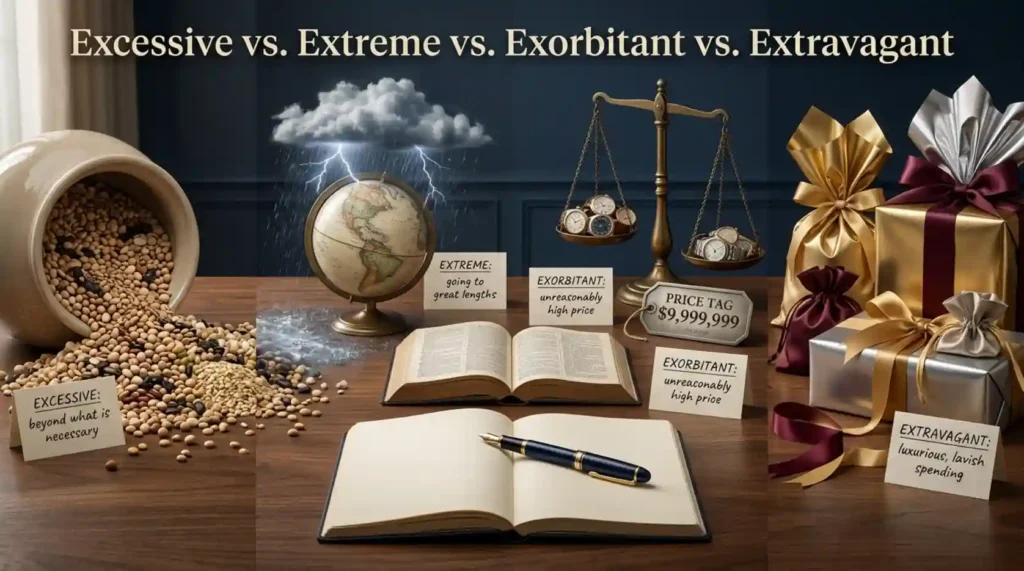
These four words start with the same letter and are easy to mix up.
| Word | Main Idea | Typically Used For | Example |
| Excessive | More than is needed or allowed | Almost anything | The rules banned excessive noise. |
| Extreme | Very great in degree | Weather, views, actions | They faced extreme cold. |
| Exorbitant | Unfairly high | Prices and fees | The ticket price was exorbitant. |
| Extravagant | Spending or acting without limits | Money, parties, habits | He led an extravagant lifestyle. |
“Excessive” is the widest word. The other three are narrower and usually say more.
Sources: Merriam-Webster; Collins Dictionary
Excessive and Opposite/Paired Word Pairs
| Word | Paired Word | Note |
| Excessive | Moderate | The most common opposite. It means within sensible limits. |
| Excessive | Reasonable | Used for prices, demands, and requests. |
| Excessive | Sensible | Used for choices and habits. |
| Excessive | Modest | Often used for amounts, hopes, and spending. |
| Excessive | Insufficient | Opposite in amount: too little, not too much. |
| Excessive | Restrained | Used for behavior and style. |
| Excessive | Minimal | Describes the smallest possible amount. |
“Moderate” and “reasonable” are the most natural opposites. “Insufficient” is a different kind of opposite. “Excessive” means too much, and “insufficient” means too little.
Sources: Merriam-Webster; Collins Thesaurus
Common Word Partners of “Excessive”
| Pattern | Common Partners | Example |
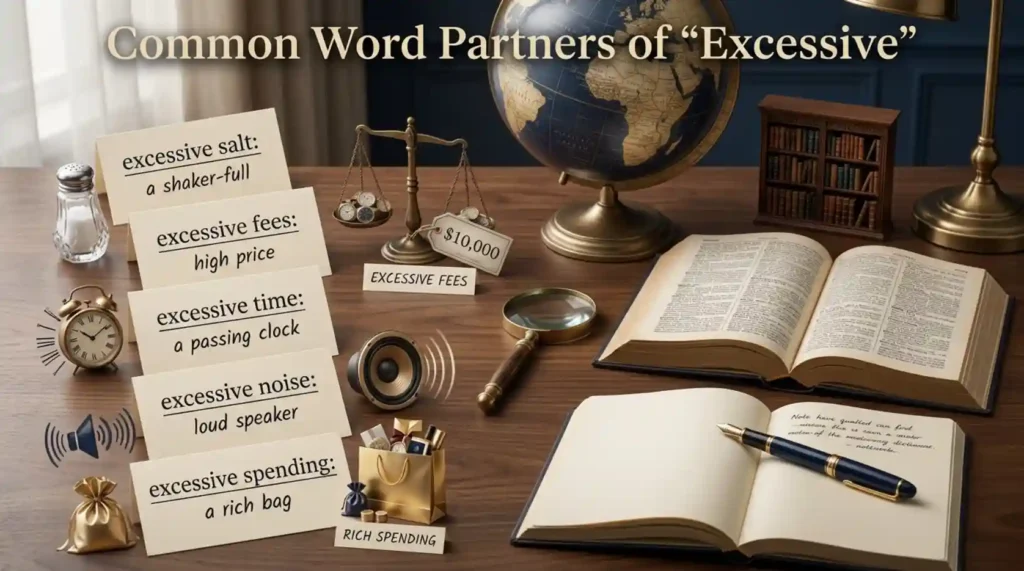
| excessive + noun (amount) | amount, number, use | An excessive amount of salt ruined the soup. |
| excessive + noun (behavior) | drinking, spending, force | The report criticized the excessive use of force. |
| excessive + noun (cost) | fees, charges, prices | Customers complained about excessive fees. |
| excessive + noun (conditions) | heat, noise, speed | Excessive speed caused the crash. |
| excessive + noun (body or health) | sweating, weight gain, sleepiness | Excessive sweating can be treated. |
| excessive + noun (feeling) | praise, worry, pride | She was embarrassed by the excessive praise. |
| excessively + adjective | high, long, cautious | The test was excessively long. |
Sources: Collins Dictionary; Merriam-Webster; Dictionary.com
Idiomatic Phrases Featuring “Excessive”
“Excessive” has no true idioms. The three expressions below are established fixed phrases, common in law and everyday official writing.
1. Excessive force
- Meaning: More physical force than the situation allows or needs, especially by police or guards.
- Example: The review found that the officer used excessive force.
2. Excessive bail
- Meaning: A bail amount that is set higher than is fair for the case. The phrase is known from the Eighth Amendment of the US Constitution.
- Example: The lawyer argued that the bail was excessive for a minor offense.
3. Excessive wear and tear
- Meaning: Damage to a rented item or property that goes beyond normal use.
- Example: The landlord kept part of the deposit for excessive wear and tear.
Sources: Merriam-Webster; Cambridge Dictionary; Legal Information Institute (Cornell Law School)
Word Formation of “Excessive”
Etymology & Structure
“Excessive” comes from Old French excessif, which came from Medieval Latin excessivus. It is built from the Latin excessus (“a going out” or “going beyond”), from excedere (“to go out, go beyond”). The ending -ive turns the root into an adjective. The same root gives us “exceed” and “excess.”
Date and History
Dictionaries place the first English use in the late Middle Ages (about the 14th to 15th century), and the exact date varies by source.
Word Class Variations
- Adjective: excessive
- Adverb: excessively
- Noun: excessiveness; excess
- Verb (related): exceed
- Adjective (related): excess (as in “excess baggage”)
Sources: Etymonline; Merriam-Webster; Collins Dictionary
Common Word-Choice Mistakes
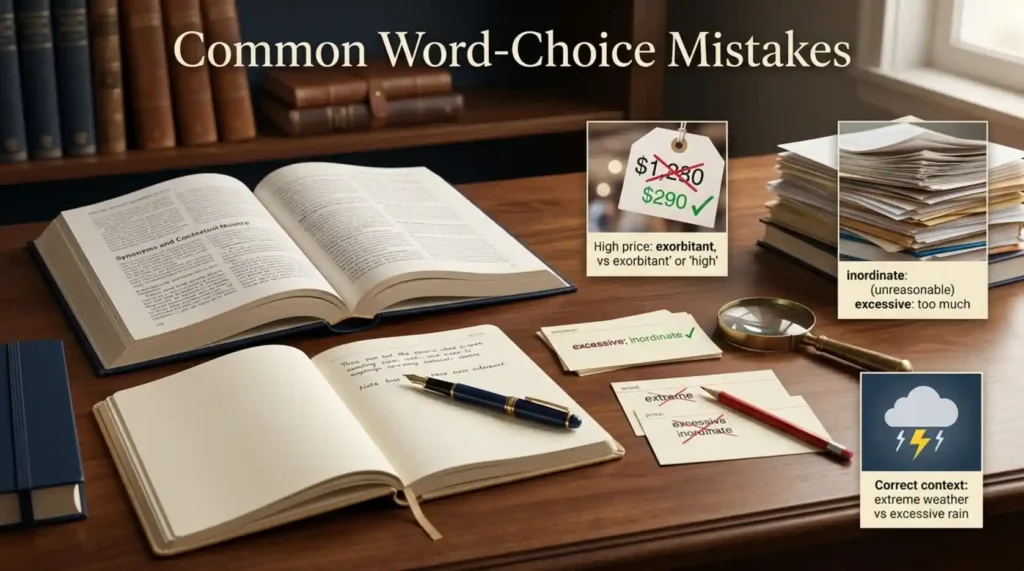
- Excessive cold weather: use “extreme cold weather” when you mean intensity.
- An exorbitant amount of homework: use “excessive,” since “exorbitant” is almost always about price.
- An undue amount of joy: use “great” or “extreme,” since “undue” suggests something negative or improper.
- A redundant harvest: use “surplus” or “overabundant,” since “redundant” means repeated or unneeded.
- She was lavish with complaints: use “excessive” or “constant,” since “lavish” usually describes generosity or luxury.
- Excessive is the same as extra: use “extra” for something simply added and “excessive” for more than is acceptable.
- An uncalled-for price: use “exorbitant” or “steep,” since “uncalled-for” describes remarks or behavior.
Frequently Asked Questions
What is the closest synonym for excessive?
“Undue” and “immoderate” are close in meaning, and “extreme” is the closest everyday word. The best choice depends on the context.
What is a formal alternative to excessive?
“Inordinate,” “immoderate,” and “undue” are all formal.
What is a good word for excessive prices?
“Exorbitant” is the standard choice. “Extortionate” is stronger, and “steep” is informal.
What is a good word for excessive behavior?
“Intemperate,” “unrestrained,” and “extravagant” all describe behavior that lacks limits.
What is the opposite of excessive?
“Moderate” is the most common opposite. “Reasonable” and “modest” also work.
Is excessive the same as extreme?
Not always. “Excessive” means beyond what is needed or allowed, while “extreme” means very great in degree.
Can excessive be used for people?
It usually describes actions, amounts, or habits, not people directly. We say “excessive drinking,” not “an excessive person.”
What is the difference between excessive and superfluous?
“Excessive” means too much. “Superfluous” means not needed, even in small amounts.
Is “over-the-top” formal?
No. It is informal and works best in speech and casual writing.
Can excessive describe something good?
Rarely. It nearly always suggests a problem. For a positive tone, “lavish” or “generous” may fit better.
Conclusion
The closest alternatives to “excessive” are “extreme,” “undue,” “immoderate,” and “inordinate.” “Exorbitant” and “extravagant” are stronger and fit smaller areas, such as price and spending.
Context matters because many alternatives only partly match the meaning. “Needless” and “superfluous” describe things that are not needed. “Intemperate” describes behavior. “Disproportionate” compares a response with its cause.
To choose the right word, first decide what is too much: an amount, a price, a behavior, or a reaction. Then match your tone. Use “undue” or “inordinate” in formal writing, and “steep” or “over-the-top” in casual speech.